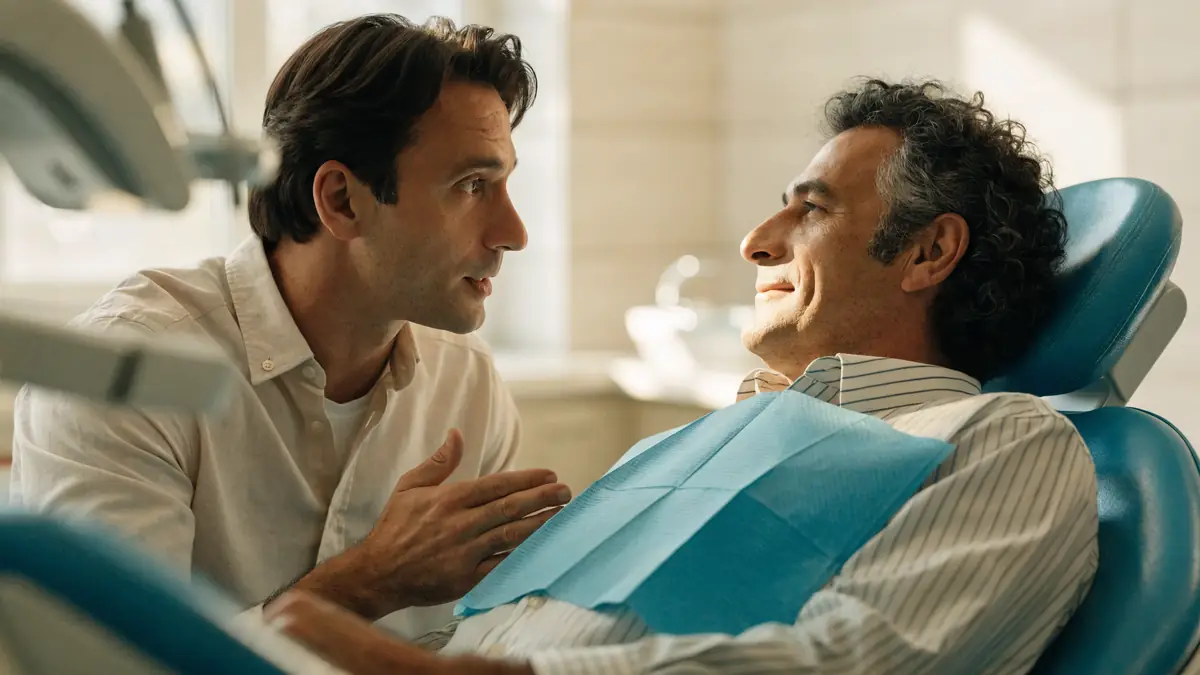
If you just found out you need a root canal, there is a good chance one question is looming larger than all the others: do root canals hurt? It is one of the most common worries we hear at My Smiles USA, and it makes sense — root canals have spent decades as the punchline for “the most painful thing at the dentist.” The reassuring truth is that a modern root canal is designed to relieve pain, not cause it. For most patients, the procedure feels a lot like getting a routine filling. Let’s clear up the myth and walk through what really happens.
Why root canals got such a scary reputation
The fear is mostly a leftover from the past. Root canal techniques, anesthetics, and instruments have improved dramatically over the years, but the reputation stuck around long after the experience changed. There is also a simple mix-up at the heart of the myth: people remember the pain that sent them to the dentist — a throbbing, swollen, sleepless-night toothache — and connect it to the treatment. In reality, that severe pain is caused by the infected or inflamed nerve inside the tooth. The root canal is what makes it stop.
So, do root canals hurt? Here’s the honest answer
During the procedure itself, you should feel little to nothing beyond some pressure and vibration. Before any treatment begins, your dentist thoroughly numbs the tooth and the surrounding area with local anesthetic, so the nerve that was causing all that trouble simply cannot send pain signals. Many patients tell us afterward that they expected the worst and were surprised to find it was far easier than the toothache that brought them in. If you ever feel discomfort during treatment, you can let your dentist know and they can add more numbing right away — comfort is something we check on throughout, not just at the start.
It is normal for the tooth and jaw to feel tender for a few days afterward, especially while the area heals. That mild soreness is usually well controlled with over-the-counter pain relievers and fades quickly. In other words: the hard part is almost always the tooth pain before the appointment, not the treatment.
What actually causes the pain a root canal fixes
Inside every tooth is a soft core called the pulp, which contains nerves and blood vessels. When a deep cavity, a crack, or an injury lets bacteria reach the pulp, it becomes inflamed or infected. Because that tissue is packed with nerves, the result can be intense, lingering pain — often worse with hot or cold, or when you lie down at night. A root canal treats the problem by removing the damaged pulp, cleaning and disinfecting the inside of the tooth, and sealing it. Once the inflamed nerve tissue is gone, the source of the pain is gone too, and your natural tooth gets to stay in place.
What to expect, step by step
1. Numbing and gentle preparation
Your dentist starts by numbing the tooth completely. Once you are comfortable, a small opening is made to reach the pulp chamber. You may feel pressure, but not pain.
2. Cleaning and shaping
The infected or damaged pulp is carefully removed, and the inner canals are cleaned, disinfected, and shaped. This is the part that actually ends the toothache by clearing out what was inflaming the nerve.
3. Sealing and restoring the tooth
The cleaned canals are filled and sealed to keep bacteria out. Because a treated tooth can become more brittle, it is often protected with a crown afterward so it stays strong for everyday chewing. Your dentist will explain whether your tooth needs one.
Managing comfort after your appointment
Recovery is usually straightforward. To keep the days after your root canal comfortable, it helps to take any recommended pain reliever as directed, chew on the opposite side until the final restoration is placed, and avoid very hard or crunchy foods on that tooth for a little while. Mild tenderness that steadily improves is expected. Reach out to your dental team if you notice increasing pain, swelling, or pressure that does not settle down, so they can check on you.
How My Smiles USA keeps root canals comfortable
We know dental anxiety is real, and no one should feel judged for being nervous. Our approach is gentle, unhurried, and judgment-free — we explain each step, make sure you are fully numb before we begin, and check in with you along the way. If a painful tooth is keeping you up at night, you do not have to wait weeks to be seen; we offer same-week appointments at both of our offices. New patients can also get started with our $99 new-patient special, which includes an exam, x-rays, and a cleaning.
Frequently asked questions
Do root canals hurt during the procedure?
For most patients, no. The tooth and surrounding area are fully numbed with local anesthetic first, so you should feel only mild pressure or vibration — similar to having a cavity filled. Tell your dentist if you feel any discomfort and they can add more numbing.
Is a root canal more painful than a toothache?
Usually the opposite. The severe pain patients remember comes from the infected or inflamed nerve inside the tooth. A root canal removes that tissue, which is what relieves the pain rather than causing it.
How long does root canal pain last afterward?
It varies from person to person, but mild soreness or tenderness typically eases over a few days and is well managed with over-the-counter pain relievers. Discomfort that worsens or does not improve should be reported to your dentist.
Should I get a root canal or just pull the tooth?
Whenever possible, saving your natural tooth is the preferred option because it preserves your bite and spacing. The right choice depends on your specific tooth, so ask us and we will walk you through what makes sense for your situation.
Don’t wait out the pain — we can help
If a nagging or severe toothache has you dreading treatment, remember that the root canal is the part that brings relief. Our team at My Smiles USA provides gentle, modern care in a comfortable, judgment-free setting, with same-week availability. Visit us at 6719 W Capitol Dr in Milwaukee or 4915 Washington Ave, Suite B in Racine, and ask about our $99 new-patient special. Book your appointment today and let’s get you out of pain and back to smiling.